Solutions

The Gap Isn't Detection.It's execution.

Your monitoring stack is telling you what is wrong. Your team already knows that. What they need is the governed, auditable, agent-ready layer that closes the gap between signal and action. OpsZ is that layer. Across incident response, routine automation, and change management, the model is the same: humans define policy, OpsZ governs execution, agents do the work.

The operating model shift

Same incident. Different model.

The difference is not the tools you have. It is the layer that connects them, governs the actions between them, and records everything that happens.

Today · 45 min, 2 hrs

Current Organizational Workflow

  • Incident triggers notification to on-call SRE
  • Switch between monitoring tools and cloud consoles
  • Hunt for an outdated runbook
  • SSH in, run diagnostics, execute fix manually
  • Update the ticket, hope for the best
  • Post-mortem requires hours of archaeology
With OpsZ · minutes, not hours

Agent-assisted response inside guardrails

  • Alert triggers a governed workflow automatically
  • Agent queries live inventory and dependencies
  • Correlates state, identifies root cause
  • Executes fix inside pre-approved blast-radius limits
  • Validates and logs every action automatically
  • Post-mortem assembles itself from the audit trail
Auto-Remediation

From Alert to Resolved

One incident, four moments. Watch it move from signal to resolution — governed, logged, and hands-off.

Immediate

T+0 Alert Fires

Governed workflow triggered. Live context pulled automatically.

Minutes

T+1 Context Assembled

Inventory queried. Dependencies mapped. Blast radius computed.

Immediate

T+3 Fix Executed

Pre-approved playbook runs. Every step logged. Rollback ready.

Immediate

T+8 Audit Complete

Full record assembled. SRE reviews over coffee, not carnage.

"The post-mortem that took hours of archaeology now starts with a report that assembled itself."

MTTR impact

What teams actually see.

Baselines from reference deployments and design-partner work. Individual results vary.

Use caseBefore OpsZWith OpsZImprovement
Production incident response45 min avg.8 min avg.~82%
Fleet-wide patch cycle3 weeks3 days~85%
CVE exposure identificationDays to weeksMinutesFleet-wide, instant
Certificate renewal cycleManual, error-proneAutomated, monitoredZero surprise expirations
CIS compliance score7897+19 points
Operational toil per SRE65%+ of time40% reclaimedRedirected to higher-value work

*Baselines from design-partner work. Individual results vary.

Use Cases

Where OpsZ creates immediate leverage.

OpsZ is a horizontal platform, but teams come to it through specific pain. These are the three areas where organizations see value fastest.

//SolutionsUse Case 01 / 03
Primary use case

Incident response and remediation

Most common entry point

When an alert fires, your team needs to act fast, safely, and with full visibility into what they are touching. OpsZ gives responders pre-approved playbooks, live infrastructure context, blast-radius awareness, and a complete audit trail. From alert to resolved, without the heroics.


  • Alert-triggered governed workflow execution
  • Pre-approved remediation inside blast-radius limits
  • Live inventory and dependency querying during incidents
  • Automatic rollback on validation failure
  • Agent-assisted root cause correlation
  • Full audit trail, every action, human or agent
What teams see

45 min to 8 min

MTTR, reference deployments

Zero heroics

SRE reviews the resolution, not the fire

Audit-ready

Every action logged, timestamped, attributable

Baselines from design-partner work. Individual results vary.

30 minutes.
Practical conversation.

We will look at your current operating model, where fragmentation shows up, and where OpsZ creates immediate leverage in your environment. No deck-flipping. Just an honest conversation about whether this is the right fit.

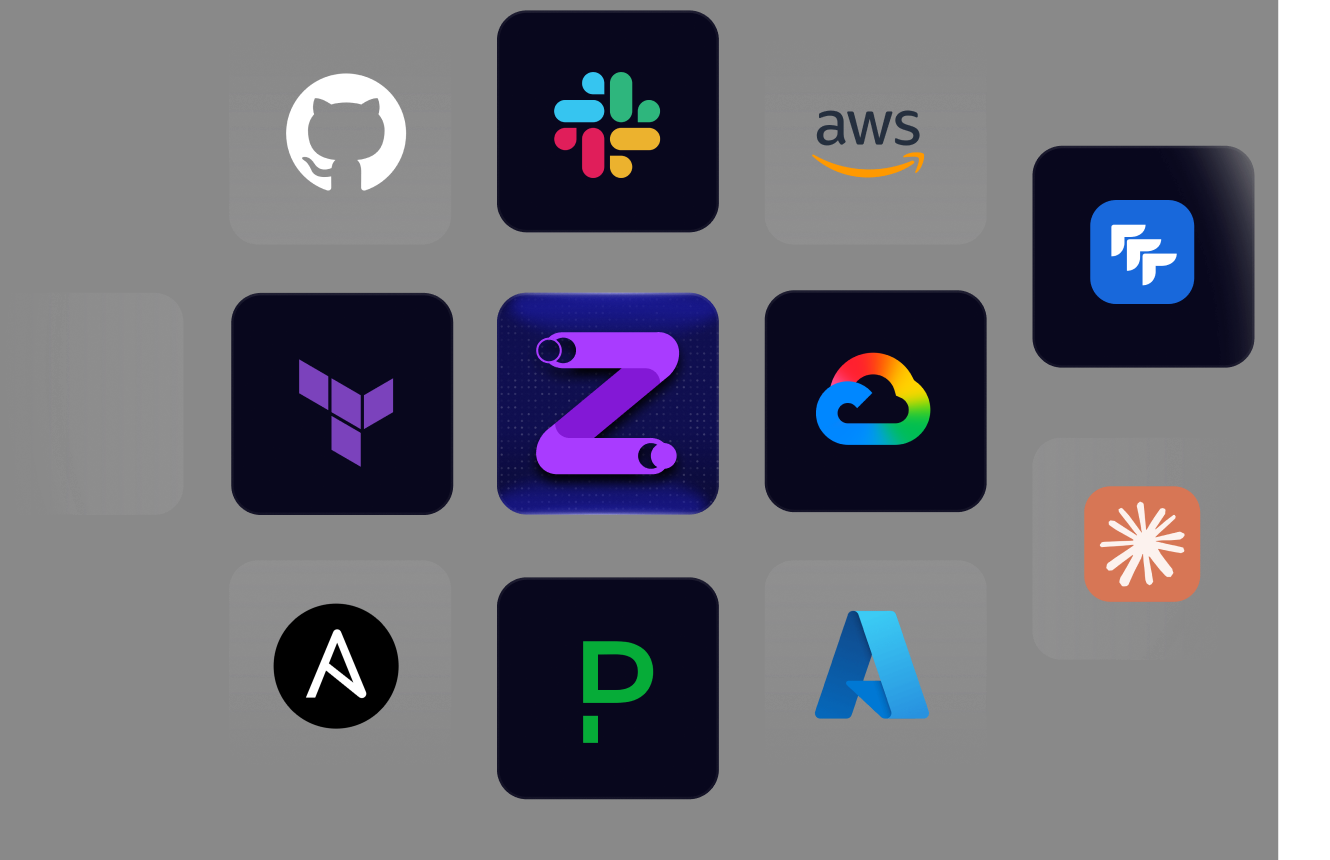
OpsZ integrations across your tools