Infrastructure Automation IT Operations Infrastructure Orchestration Enterprise AI AI Governance AI Operations / AIOps Infrastructure Execution
Surprise: AI Is a Commodity! (Actually, Not Surprising at All.)
Scott Albrecht · September 23, 2026 · 2 min read
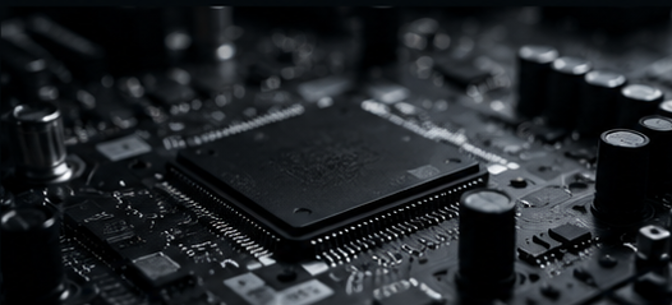
Scottie's argument is that differentiation migrates away from the model itself and into the surrounding system: orchestration, architecture, workflows and integration. A semiconductor or motherboard macro makes AI feel like a component rather than magic.
Marc Benioff made a point in a recent CNBC interview that caught my attention. While I don’t necessarily align with some of his other recent comments, on this specific idea he’s right:
AI is quickly becoming a commodity.
For anyone who wants to read the interview itself, here’s the article.
What struck me is how directly this aligns with Jim Utterback’s innovation arc something I’ve been thinking about a lot since writing about him recently. Utterback taught that every breakthrough goes through the same predictable cycle. First, there’s the excitement around the invention itself. Then competitive pressure rises, prices fall, capabilities converge, and the technology becomes standardized and interchangeable. Once that happens, the real innovation shifts from the core technology to the systems that surround it.
That’s exactly where AI is right now.
Enterprises are realizing that the model isn’t where the differentiation lives anymore. Whether a team is using OpenAI, Anthropic, Meta, or a domain-tuned local model matters less than it did even a year ago. The performance gap is shrinking, and costs are normalizing. The excitement around “the model” is giving way to a much more practical question: How do we actually use this inside our business to make work faster, safer, and smarter?
That shift from novelty to utility is commoditization by definition. And I'd argue it’s an important sign of maturity of design. Once a technology reaches this phase, the field opens up for system-level innovation: how intelligence moves through workflows, infrastructure, metadata, operations, and human processes; how it reduces toil; how it improves reliability; how it integrates into what companies already have.
This is the part of the curve that creates long-term value. It’s where architecture and orchestration matter more than the underlying model.
And this is exactly the layer OpsZ is built for. We’re not trying to win the model race that race is naturally drifting toward utility. Our work is in designing the connective tissue: distributed workflows, metadata that understands the environment, hybrid and multi-cloud substrate, and a system that lets AI show up in real enterprise operations where the stakes actually live. Pretty much this is moment when the invention becomes infrastructure.
So yes — on this specific point, I think Benioff has it right:
AI is becoming another commodity (like compute), and that’s not a warning sign. It’s an inflection point.
The market is maturing. It means the excitement is shifting from “look what AI can do” to “look what organizations and platforms can do because of AI.” And it means we’re entering the chapter where the real, durable innovations get built. There's still a long way to go.
That’s the part of the arc we’re focused on and the one that matters most for enterprise AI based operations going forward.